Running with Hypermobility: What You Need to Do Differently
If you’re living with hypermobility or conditions such as Ehlers-Danlos syndrome (EDS), you may have been told at some point that running “isn’t ideal” for your body.
That advice often misses the bigger picture.
Running can actually be an excellent form of exercise for people with hypermobility. It supports cardiovascular fitness, mental health, strength, and resilience.
The key is understanding this:
You may not be able to approach running exactly the same way as someone without hypermobility.
Success isn’t about avoiding running. It’s about learning how to manage load across multiple systems, not just your joints and muscles.
Why Running Can Feel Harder with Hypermobility
Hypermobility doesn’t simply mean being “more flexible.”
It often comes with:
- Reduced passive joint stability
- Greater reliance on muscles for control
- Changes in how the nervous system regulates movement
- In some cases, autonomic involvement such as Postural orthostatic tachycardia syndrome
This means your body may be working harder than expected just to maintain stability and control while running.
1. Mechanical Inefficiency in the Foot and Lower Limb
Common movement patterns we often see include:
- Excess pronation (rolling in)
- Delayed resupination (rolling out)
- Reduced push-off efficiency
- More movement through the foot rather than creating a rigid lever
This can lead to:
- Reduced running efficiency
- Increased load through soft tissues
- Earlier fatigue
- Increased injury risk over time
2. Your Brain Is Constantly Adapting Your Movement
When joints feel less stable, your nervous system often changes how you move to keep you safe.
This may look like:
- Slightly slower speed
- Shorter stride length
- Increased muscle co-contraction (stiffening)
- More cautious or guarded movement
These are not “bad habits.”
They are protective strategies.
Over time, however, these adaptations can increase the overall energy cost of running.
3. Fatigue Happens Earlier (And It’s Not Just Muscular)
With hypermobility, multiple systems may be working harder:
- Muscles are stabilising more
- The nervous system is coordinating more
- The cardiovascular system may be under greater demand
This can mean:
- Running feels harder at the same pace
- Fatigue sets in earlier
- Symptoms often appear later that day or the following morning
4. Cardiovascular and Autonomic Factors
Some people with hypermobility also experience autonomic dysfunction, including conditions such as POTS.
This may affect:
- Heart rate response
- Blood pressure regulation
- Blood flow back to the heart
- Heat tolerance
During running, this may present as:
- Heart rate climbing faster than expected
- Lightheadedness
- Fatigue that feels disproportionate to effort
- Difficulty recovering from longer sessions
For some runners, a “moderate” run may represent a much higher internal load than expected.
5. The Role of Allostatic Load
When your musculoskeletal, nervous, and cardiovascular systems are all under ongoing demand, your body accumulates what’s called allostatic load, your total stress burden.
This can show up as:
- Fluctuating exercise tolerance
- Periods where everything feels harder
- Increased sensitivity to sudden training spikes
This isn’t a reason to stop running.
It simply means your training needs to be dosed appropriately.
What You Need to Do Differently
1. Manage Load Across Multiple Systems
Most running advice focuses on pace or distance.
With hypermobility, you also need to monitor:
- Energy levels
- Stress
- Recovery
- Sleep quality
- Heart rate response
- HRV trends (if tracked)
Guidelines:
 Keep pain at 2–3/10 or less Symptoms should settle within 24 hours Watch for “flat,” heavy, or drained feelings
2. Avoid the Boom–Bust Cycle
A very common pattern:
Feel good → increase load → flare up → rest → repeat
Instead:
- Build gradually
- Stay consistent
- Respect early warning signs
- Leave some in the tank
3. Improve Running Mechanics (Without Fighting Your Body)
You don’t need perfect form.
Your body may already be adapting in smart ways.
Instead, focus on efficiency.
Helpful strategies may include:
- Slightly increasing cadence
- Avoiding overstriding
- Maintaining a relaxed upright posture
- Starting on predictable surfaces such as treadmills

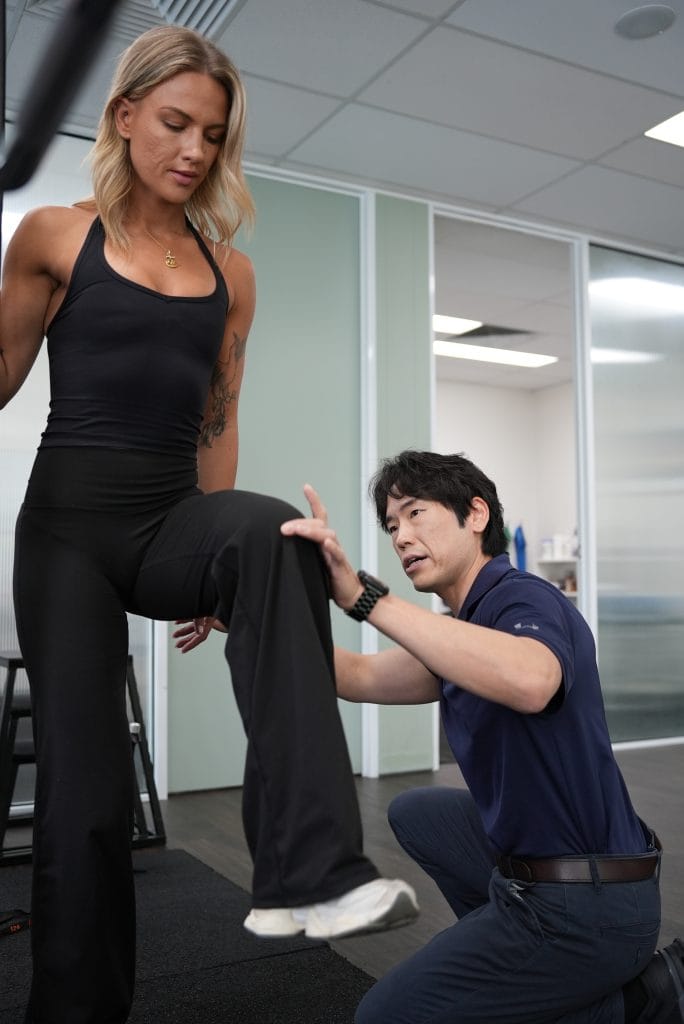
Working with a trained running coach or sports podiatrist can make a big difference.
4. Strength Training Is Essential
With hypermobility, flexibility usually isn’t the problem.
Control is.
Focus on strengthening:
- Calf raise variations
- Foot intrinsic muscles
- Glutes
- Hip stabilisers
- Core control
This helps:
- Reduce compensations
- Improve efficiency
- Increase load tolerance
5. Respect Fatigue Early
Fatigue isn’t always sore muscles.
It may be:
- Neurological (coordination drops)
- Cardiovascular (heart rate rises unexpectedly)
- Systemic (whole-body fatigue)
When fatigue rises:
- Mechanics change
- Load shifts
- Injury risk increases
Learning to spot fatigue early is one of the biggest keys to sustainable running.
Where Podiatry Fits In
At clinics like Melbourne Podiatry Clinic, podiatry isn’t just about your feet.
A comprehensive running assessment may include:
- Gait analysis
- Strength testing
- Load management planning
- Footwear guidance
- Return-to-run programming
- Orthotic advice when appropriate
Orthotics can reduce load in some cases, but they work best alongside active rehab and strength work.
The Takeaway
Running with hypermobility isn’t just about your joints.
It’s about how your:
- Musculoskeletal system
- Nervous system
- Cardiovascular system
…work together under load.
If you:
Build strength Manage load consistently Work with your body’s natural adaptations Respect fatigue and recovery
You can absolutely run in a way that is sustainable, enjoyable, and performance-focused.
The goal isn’t perfect form. It’s building a body that can tolerate and recover from the demands of running over time.
Need Some Help Navigating Running with Hypermobility?
If you or someone you know is living with hypermobility, Ehlers-Danlos syndrome, or unexplained running-related fatigue, injuries, or instability, you don’t have to figure it out alone.
Niss has a special interest and growing clinical experience in working with hypermobile runners and individuals with complex movement presentations. She is passionate about helping people better understand their bodies, build confidence, and develop a sustainable approach to running and exercise.
Whether you’re dealing with recurrent injuries, fatigue, footwear questions, strength deficits, or simply want clarity around how to train smarter, Niss would love to help.