
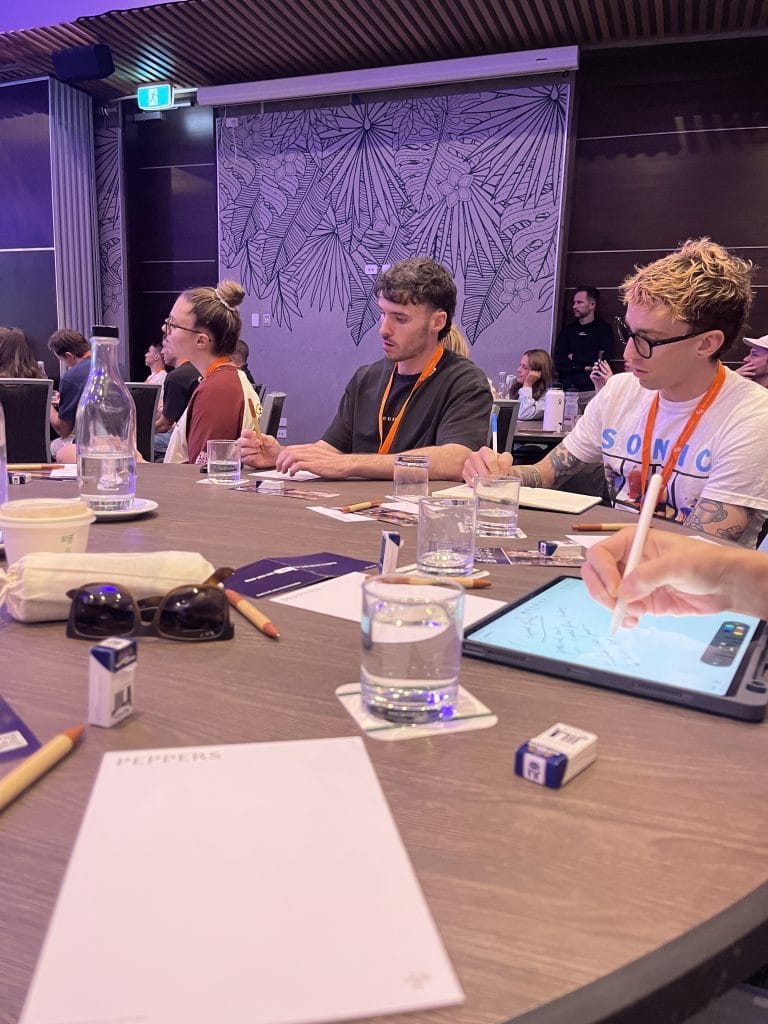
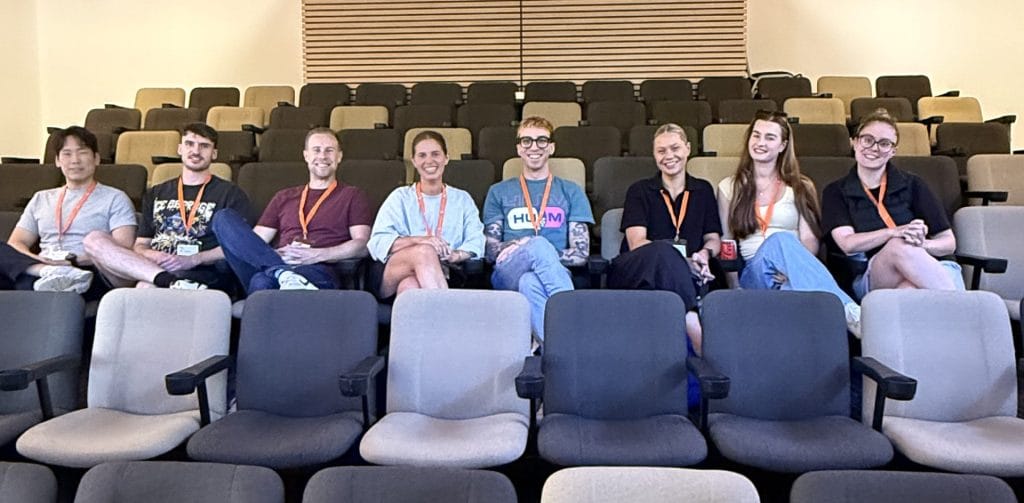
Earlier this month, our podiatry team headed to Noosa for the Sports + Exercise Podiatry Australasia (SEPA) Conference. We came back energised, challenged, and already applying what we learned in clinic. Here’s a look at the ideas that are going to shape the way we help patients recover and return to their goals.


Shin splints might need a new name
One of the most talked-about presentations of the conference came from PhD candidate Laura Anderson, whose research is pushing the profession to rethink how we label and manage medial tibial stress syndrome, commonly known as shin splints.
The emerging evidence is compelling: MTSS behaves more like a load-induced soft tissue and bone remodelling problem than a true bone stress injury. It doesn’t behave like a stress fracture, it doesn’t need to be managed like one, and treating it that way may actually be getting in the way of better outcomes.
Laura proposed a new label: LIMP, which stands for Load-Induced Medial-leg Pain. It’s simple, it’s accurate, and importantly, it helps patients understand what’s actually happening rather than fearing the worst. The management approach flows naturally from the name: modify the load, build capacity, and retrain movement patterns where appropriate. Our team will be using this framing with patients going forward.
Bone stress injuries are a system problem, not just a local one
Rich Willy from Ohio State University delivered a standout presentation on bone stress injuries, making a strong case for moving away from the single-risk-factor model that has dominated clinical thinking for years.
His central point: BSIs happen at the intersection of applied load, bone quality, energy availability, and psychosocial factors. You cannot address one in isolation and expect a lasting result. A runner who returns from a tibial stress fracture and adds a bone loading program, but is still underfuelling or training in a high-pressure environment, is likely heading for another injury. As Rich put it, you can’t out-exercise underfuelling.
Clinically, this shifts our approach toward a broader conversation with each patient, covering training load, nutrition, menstrual health, lifestyle factors, and the psychology of sport. For runners presenting with a second or third bone stress injury, these upstream questions are now front and centre.
His workshop also gave our team practical tools for structuring rehabilitation progressions, including using a heel lift to temporarily reduce plantarflexor demand during early loading stages, and understanding that bone responds best to brief, high-quality loading sessions rather than high-volume work.
Ankle sprains: common, underestimated, and often undermanaged
A/Prof Claire Hiller from the University of Sydney delivered a comprehensive look at ankle sprains that left our team with a clear message: we tend to underestimate how serious these injuries can be.
Up to 40% of people who have a first lateral ankle sprain go on to develop chronic ankle instability. Most of them never sought proper rehabilitation. The data is striking: patients who don’t complete structured rehabilitation have significantly worse outcomes, including higher rates of respraining and giving way, than those who do.
Claire also highlighted how often associated injuries get missed at the time of an ankle sprain, including peroneal tendon involvement and syndesmosis injuries. Our team is now more consciously incorporating syndesmosis testing as a standard part of ankle assessment, rather than only when a high ankle sprain is suspected.
The take-home: ankle sprains are common and easy to spot, but they deserve a thorough workup, a structured rehabilitation program, and a proper conversation with patients about why early and complete rehab matters.
Running retraining: start in the sagittal plane
Prof Christian Barton brought his characteristic depth and practical grounding to running retraining, both in his main presentation and a hands-on workshop the following day.
His RISK framework gave our team a useful structure for thinking about running-related injuries: Reduce overall load, Improve capacity to attenuate load, Shift the load away from painful tissue, and Keep adapting to the individual in front of you.
A key clinical insight was the importance of the sagittal plane as a starting point for gait assessment. Overstriding, anterior pelvic tilt, and low step rate are interconnected and often easier to address than frontal plane issues. Before targeting strike pattern or hip mechanics, Christian’s approach asks whether the runner has the hip mobility and posterior chain strength to actually change their gait, and then works from there.
For our team, this reinforces the value of video-based gait assessment in clinic and closer collaboration between our podiatrists and physiotherapy colleagues, particularly where proximal strength and trunk control are limiting factors.
Running shoes: there’s no single right answer, but there is a better process
Podiatrists John Charles and Darcy Dore closed the conference with a practical workshop on running shoe prescription, and their central message was refreshingly honest: the evidence for any specific shoe recommendation is weak, and no single shoe works for everyone.
That’s not a reason to give up on shoe prescription. It’s a reason to lean into what sports podiatrists actually bring to the conversation. Fit, comfort, and a runner’s own beliefs about their footwear all influence outcomes, and the clinical conversation we have with a patient about their shoes may matter as much as the shoe itself.
In practice, this means thinking about which plane of motion a runner is vulnerable in, which shoe features address that vulnerability, and what trade-offs come with those features. A higher stack offloads the forefoot and ankle but can increase instability. A rocker geometry reduces MTP joint load but may not suit every runner. There is no perfect shoe, only the best match for this person at this point in time.
One topic that generated plenty of discussion was advanced footwear technology, the carbon-plated, high-stack racing shoes now common across all levels of running. The evidence is still emerging, but load appears to be redistributed rather than eliminated, with tibial stress injuries potentially reducing while proximal injuries may be increasing in high-volume users. The dose, as always, matters.
How this changes what we do
The themes across the four days were remarkably consistent: treat the whole picture, not just the local injury. Whether it’s LIMP, a bone stress injury, an ankle sprain, or a running-related knee problem, the best outcomes come from understanding the full context of the person in front of you, building their capacity gradually and intelligently, and making sure they have the education and support to stay well long after they leave the clinic.
Our team is already applying these learnings. If any of this resonates with your own situation, whether you’re managing a shin pain that won’t quite resolve, recovering from an ankle sprain, or trying to return to running after a bone stress injury, we’d love to help you think through the full picture.