
Less guessing. More confidence. Better treatment from day one.
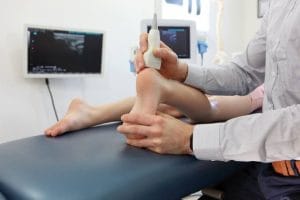
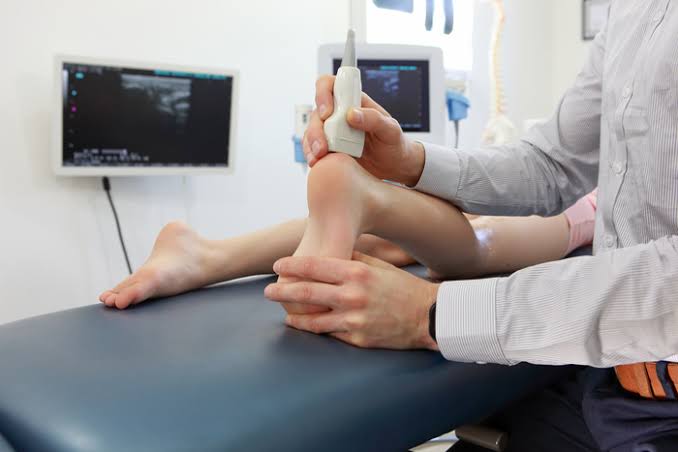
That’s exactly why I use point-of-care ultrasound during your appointment at Melbourne Podiatry Clinic.
Ultrasound doesn’t fix your pain, but it helps us pinpoint what’s causing it, so your treatment is focused and bespoke to your issue from the very start.
Why is that important?
Foot and ankle pain isn’t always as straightforward as it seems.
Two people can have pain in the same area but for completely different reasons. That’s why I don’t believe in guessing or using the same treatment for everyone.
Instead, I combine a thorough assessment with real-time ultrasound imaging to understand what’s happening beneath the surface.
Ultrasound is particularly beneficial when clinical presentation is inconsistent with traditional injury characteristics, or for assessment of chronic injuries, where symptoms and pain have been persistent or exacerbating.
Together, we can see your injury, discuss what it means, and build a plan that’s right for you.
5 areas where ultrasound is especially helpful
Ultrasound is particularly useful for assessing many common foot and ankle conditions. Here are five areas where it can provide valuable information to help guide your diagnosis, treatment, and recovery.
Plantar Heel Pain
Heel pain isn’t always caused by the same problem.
Ultrasound helps assess structures around the heel, including the plantar fascia, surrounding soft tissues, and nearby tendons. This helps identify the source of your symptoms and ensures your treatment targets the right tissue from the start. It’s really important to note that heel pain is NOT always “plantar fasciitis” — several different conditions can produce very similar symptoms, which makes it easy to misdiagnose based on history alone. Ultrasound allows real-time assessment of the affected area to accurately pinpoint the structure(s) involved.
Common causes of heel pain include:
- Plantar fasciitis
- Fat pad atrophy
- Calcaneal stress fracture
- Baxter’s neuropathy
- Adventitious bursitis
Posterior Heel & Achilles Pain
Pain at the back of the heel can come from several different structures.
Ultrasound allows us to assess the Achilles tendon, surrounding bursae, and tendon insertion to identify changes such as tendinopathy, tears, inflammation, or other causes of pain. It also helps monitor healing and guide your rehabilitation as you progress.
What I find particularly beneficial when it comes to assessing the Achilles region is that ultrasound can be used to dynamically assess these structures. Passive flexion and extension can give great resolution and image quality of internal fibrillar status, spot compression or inflammation associated with a bursa in the region, or in some cases, dynamically identify a structural impingement in the ankle complex.
Forefoot Pain
Pain in the ball of the foot can be difficult to diagnose based on symptoms alone.
Ultrasound is particularly useful for assessing conditions such as Morton’s neuroma, capsulitis, bursitis, tendon injuries, and other soft tissue problems affecting the forefoot. Understanding exactly what’s causing the pain helps direct the most appropriate treatment.
For long bones, ultrasound is highly sensitive and accurate for assessing small defects to the outer layer of bone, known as the cortex. It’s a very useful first-line modality for assessing subtle stress fractures in bones such as the metatarsals — a common issue in distance runners, dancers, and basketball players.
Ankle Injuries
Whether you’ve rolled your ankle recently or you’re dealing with ongoing pain, ultrasound provides a dynamic assessment of the injured area.
It can assess ligaments, tendons, muscles, and other soft tissues for sprains, tears, inflammation, or irritation, helping guide both diagnosis and rehabilitation.
Ultrasound is highly effective at assessing the lateral ankle complex, including the two most common areas for soft tissue damage after an ankle (inversion) sprain:
- Anterior Talofibular Ligament (ATFL)
- Calcaneofibular Ligament (CFL)
Is Ankle Sprain Rehabilitation really important?
Monitoring Recovery & Guiding Treatment
Ultrasound isn’t just useful at your first appointment.
It can also be used throughout your rehabilitation to monitor how injured tissues are responding, helping us adjust your treatment and exercise programme as your recovery progresses.
Combined with your symptoms and physical assessment, this allows your rehabilitation to remain personalised, evidence-informed, and objectively progressed — with confidence — getting you closer to the finish line and back to full fitness.
The biggest benefit? You understand your injury.
One of the questions I hear most is:
“Can you actually show me what’s wrong?”
The answer is often yes.
Instead of trying to imagine what’s happening inside your foot, you’ll see it on the screen as I explain everything in plain English.
When you understand why something hurts, you’ll also understand why your treatment works. That makes recovery less confusing and gives you confidence in the process.
Better information = better rehabilitation
Ultrasound is never used on its own.
I combine what I see on the scan with your symptoms, movement, strength, and clinical assessment to create a rehabilitation programme tailored specifically to you.
Whether your goal is to:
- Walk comfortably again
- Return to running
- Get back to sport
- Stay active with your family
…your rehabilitation is built around your goals.
Knowing when to refer
Sometimes the best outcome isn’t more treatment — it’s getting you to the right person sooner.
If an in-clinic ultrasound scan suggests you need further imaging, an injection, or assessment by another healthcare professional, ultrasound helps me make that decision earlier and organise the appropriate onward referral.
That means fewer delays and a clearer pathway to recovery.
My approach is simple
I want you to leave your appointment knowing:
- An accurate diagnosis
- What I can do for you
- What I need you to do
- An estimate and realistic recovery time
- No unnecessary guesswork
Just clear answers, a personalised plan, and the confidence that we’re treating the right problem from the very beginning.
Because when treatment is focused from the first step, recovery becomes much more straightforward.
The bottom line
Your feet keep you moving through every part of life, whether that’s walking the dog, keeping up with your kids, training for an event, or simply getting through the day without pain.
That’s why getting the right diagnosis from the beginning matters.
By combining a thorough clinical assessment with point-of-care ultrasound at Melbourne Podiatry Clinic, I can better understand what’s driving your symptoms, tailor your treatment to your specific injury, and guide your rehabilitation with confidence. If further investigation or specialist care is needed, we can identify that early too.
The goal isn’t simply to find what’s wrong — it’s to give you the clarity, confidence, and personalised care needed to move better, recover well, and get back to doing the things that matter most to you.
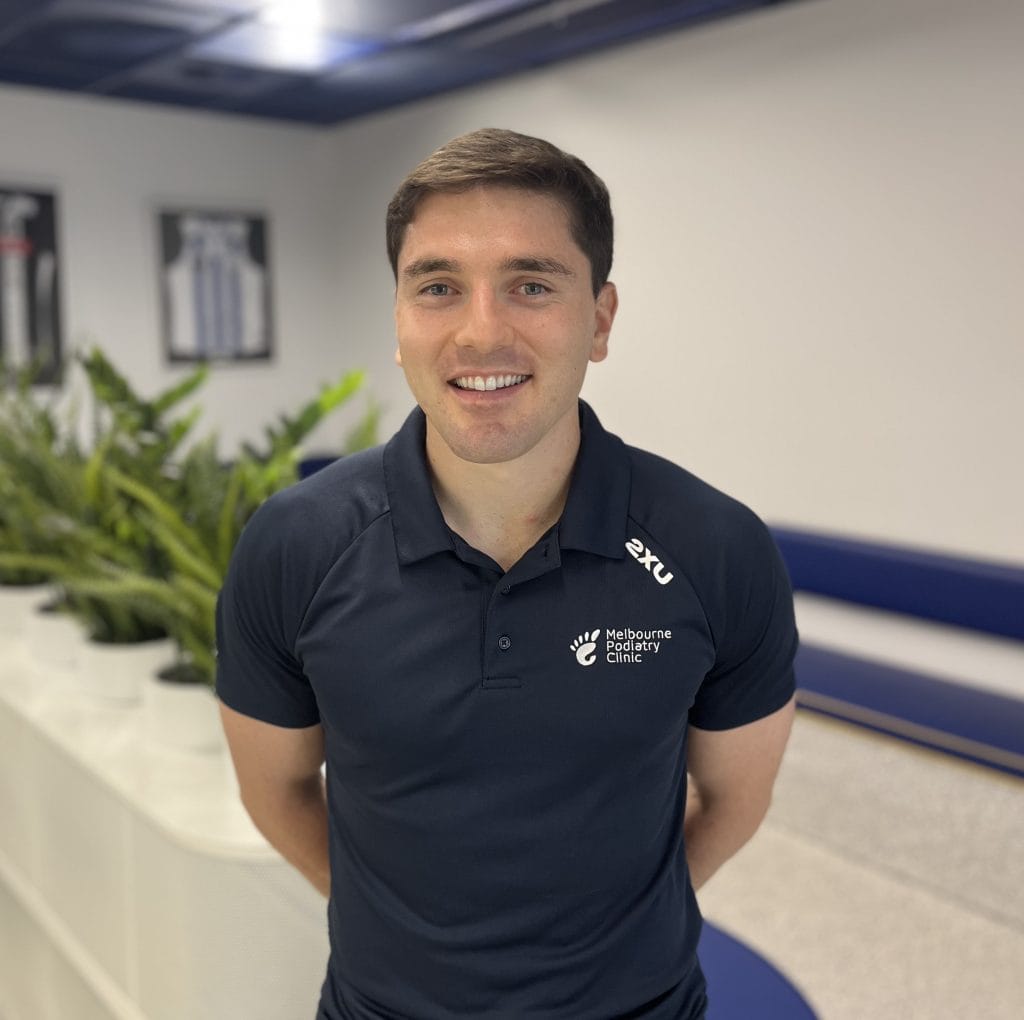
Conleth McShane MSK Podiatrist Accredited MSK Ultrasound – click HERE to find out more

